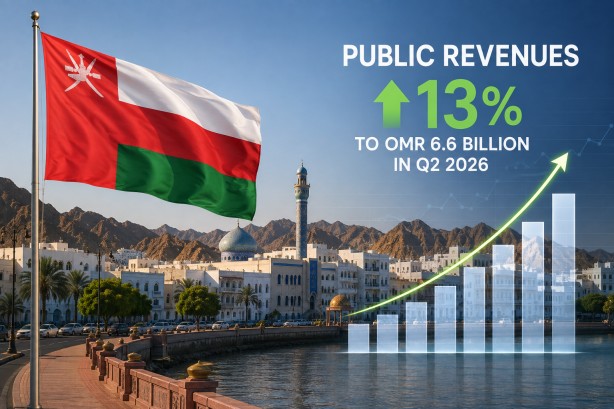
By the close of the second quarter in 2026, Oman witnessed a notable 13% increase in its public revenues, amounting to roughly OMR 6.602 billion. This surge was largely fueled by a rise in oil and gas revenues. The Ministry of Finance’s Fiscal Performance Bulletin highlighted that public revenues had climbed from OMR 5.839 billion during the equivalent stretch in 2025. Specifically, net oil revenues saw a 10% uptick, reaching OMR 3.332 billion, while net gas revenues experienced a more dramatic 32% increase, totaling OMR 1.164 billion.
Oman’s oil sector performance was underscored by an average realized oil price of $74 per barrel, with daily production levels averaging about 1.074 million barrels. This strong performance in the energy sector played a pivotal role in the overall revenue growth for the nation.
On the expenditure front, public spending grew to OMR 6.619 billion, representing a 9% rise from the previous year’s OMR 6.098 billion. Current expenditures amounted to OMR 4.369 billion, while ministries and civil units invested OMR 798 million in development projects. This increase in spending aligns with the government’s broader fiscal strategy to bolster the country’s infrastructure and economic growth.
Despite the escalation in spending, Oman managed to keep its public debt relatively steady. The debt stood at OMR 14.16 billion, maintaining a similar level to the previous year’s OMR 14.12 billion. This stability in debt levels, amidst rising revenues and expenditures, suggests a balanced fiscal approach by the Omani government.
The financial data for the first half of 2026 indicates a continuation of growth in Oman’s public finances, buoyed by robust energy sector earnings. At the same time, the government’s investment in public expenditure reflects its commitment to sustaining economic momentum and addressing developmental needs.