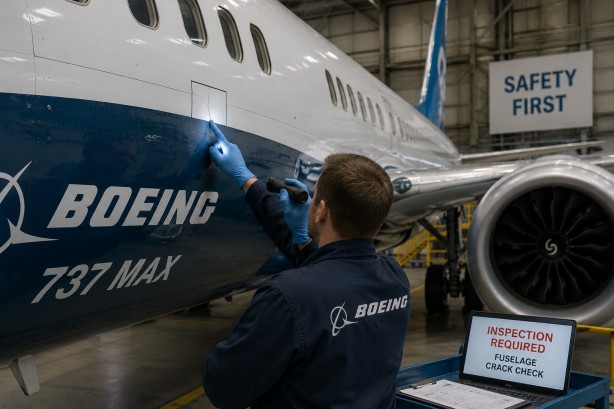
The Federal Aviation Administration (FAA) has mandated inspections for Boeing 737 Max aircraft to check for potential cracks in a key structural component of the fuselage. This directive targets approximately 471 planes, with inspections set to commence in September. At the center of these inspections is the bear strap, a crucial structural element that supports the fuselage near the aircraft’s exit doors. The concern arises from previous instances where similar cracks were found in older models of Boeing’s 737 Next Generation aircraft, leading to a proactive inspection of the newer 737 Max models.
While no cracks have been reported in the 737 Max fleet to date, the FAA indicated that the aircraft shares a similar design and manufacturing process with its predecessors, hence the precautionary measure. The agency cautioned that if these cracks go undetected, they could compromise the structural integrity of the aircraft, posing potential safety risks. This development comes as part of ongoing efforts to ensure the safety and reliability of the 737 Max, which has been under scrutiny following past incidents.
Boeing has been proactive in addressing this issue since its identification in 2019, working closely with airlines to facilitate these inspections. The company has expressed its support for the mandatory checks, which aim to detect and fix any issues before they become critical. Boeing assures that these inspections are a preventive measure designed to maintain the aircraft’s safety standards.
The current inspection requirement adds another layer to the comprehensive evaluations the 737 Max has undergone following earlier safety concerns. This aircraft model had been grounded globally after two tragic accidents in 2018 and 2019, which drew intense scrutiny over its engineering and manufacturing processes. The FAA’s recent directive underscores a continued commitment to ensuring that any potential safety issues are addressed promptly and thoroughly.