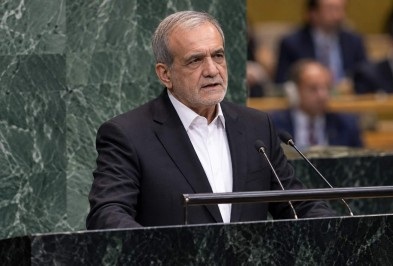
The ongoing tensions between the United States and Iran took center stage at the United Nations General Assembly, where Iranian President Masoud Pezeshkian voiced strong criticism of U.S. President Donald Trump. Despite this, Pezeshkian emphasized that Iran remains open to dialogue, provided these discussions occur without threats or military pressure.
The diplomatic overtures followed Trump’s address at the UN, in which he mentioned the possibility of further actions against Iran while also hinting at the potential for renewed negotiations. This backdrop of international diplomacy was further highlighted by a meeting between Iranian Foreign Minister Abbas Araghchi and U.S. special envoy Steve Witkoff. The three-hour discussion, mediated by Qatar, focused on Iran’s conditions for resolving the ongoing conflict and reducing economic pressure.
A critical point in these discussions involves the Strait of Hormuz, a significant trade route that has been disrupted, affecting global shipping and energy markets. Iran has stipulated that the waterway can be fully reopened if its demands, such as the cessation of military pressure and the lifting of economic sanctions, are met. Tehran’s conditions also include the end of hostilities and the release of Iranian assets.
Pezeshkian reiterated Iran’s commitment to a peaceful nuclear program, denying any pursuit of nuclear weapons. He urged regional cooperation on security matters, proposing that Middle Eastern countries collaborate instead of relying on external powers. The Iranian president further defended his country’s actions as measures of self-defense in response to perceived aggression from the United States and Israel.
Despite these tensions, the recent diplomatic engagements indicate a slight opening for dialogue between Washington and Tehran. However, significant disagreements persist, particularly concerning the nuclear program and economic sanctions. The outcome of these talks could have far-reaching implications for regional stability and international relations.