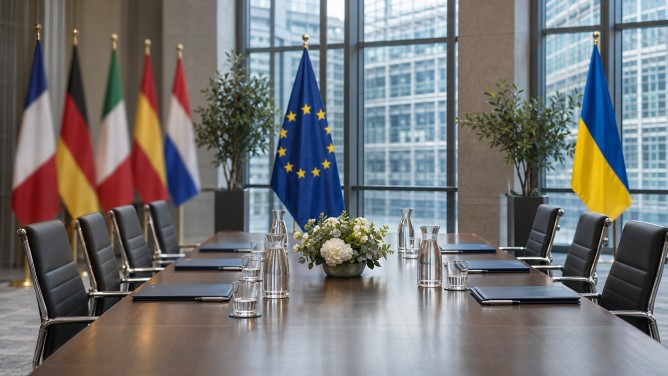
In a bid to strengthen Europe’s role in the peace process for the Russia-Ukraine conflict, France, Germany, Italy, Poland, and the United Kingdom, along with European Union institutions, have been designated to represent Europe in forthcoming negotiations. This decision was announced by European Council President António Costa, who emphasized the need for a cohesive European stance throughout the peace talks.
European Commission President Ursula von der Leyen expressed support for these diplomatic efforts, underscoring Europe’s critical role in achieving a fair and lasting peace. She highlighted the necessity of strong security guarantees and a detailed strategy for Ukraine’s recovery following the war.
This development comes as discussions involving the United States, Ukraine, and Russia gain momentum. Ukrainian President Volodymyr Zelenskyy recently engaged in talks with U.S. representatives Steve Witkoff and Jared Kushner in Ireland, after their meeting with Russian President Vladimir Putin in Moscow. These discussions have reportedly made headway on humanitarian fronts, including preparations for a significant prisoner exchange.
Zelenskyy has emphasized that European representatives should play an equal role in future peace negotiations. However, substantial disagreements persist, particularly regarding territorial arrangements and Ukraine’s security guarantees. Russian President Putin has maintained his opposition to the presence of foreign troops on Ukrainian soil under any peace agreement.
European leaders continue to advocate for sustained support for Kyiv and the imposition of additional sanctions on Moscow to facilitate a negotiated resolution. The participation of these European nations and EU institutions is seen as a strategic move to safeguard Ukraine’s interests and bolster continental security.