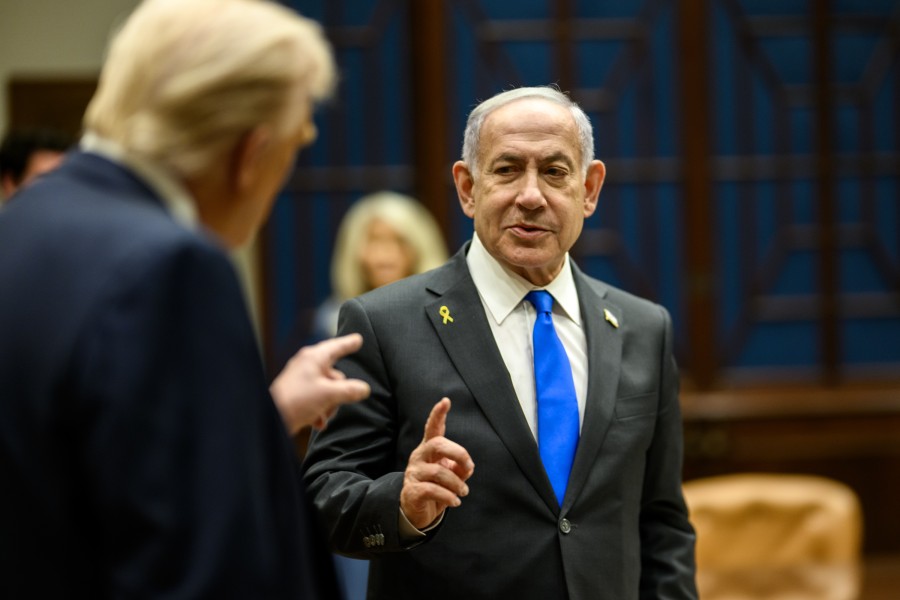
In a call for greater self-reliance, Israeli Prime Minister Benjamin Netanyahu emphasized the need for Israel to reduce its military dependence on the United States by bolstering its domestic weapons production capabilities. Speaking to reserve combat officers in the Gush Etzion settlement bloc, Netanyahu expressed appreciation for the longstanding support from the U.S. but underscored the importance of developing an independent defense manufacturing system to meet Israel’s military needs.
Netanyahu’s remarks came at a time when the United States and Israel are negotiating a new 10-year security cooperation framework. This framework seeks to shift the relationship from one primarily focused on military aid to a more balanced partnership. Additionally, Netanyahu pointed out Israel’s ongoing confrontation with Iran and its affiliated groups, stressing that the nation’s future security hinges on expanding military strength, technological prowess, and leadership capabilities.
The backdrop of these comments includes growing concerns in Israel about being left out of recent diplomatic efforts between the United States and Iran. Israel was notably absent from the negotiations leading to a recent memorandum of understanding between Washington and Tehran, which aims to ease hostilities and prevent further conflict. The agreement covers multiple regional fronts, such as Lebanon, where Israeli forces are actively engaged against Hezbollah. Iran has called for Israel’s withdrawal from Lebanese territory, a demand Israel has resisted until security threats are resolved.
This situation has brought to light the tensions surrounding U.S. influence over Israeli military decisions. U.S. President Donald Trump has alluded to the considerable leverage Washington holds over Israel due to the close alliance between the two nations. Some Israeli officials have voiced criticism of the U.S.-Iran understanding, arguing that it fails to address key objectives like dismantling Iran’s nuclear and ballistic missile capabilities. Despite these criticisms, the United States has reiterated its commitment to preventing Iran from acquiring nuclear weapons and has left open the possibility of renewed action if diplomatic efforts falter.
U.S. Vice President JD Vance defended the agreement by highlighting the extensive military assistance Washington has provided to Israel and the critical importance of maintaining the strategic partnership between the two allies. As discussions continue, Israel is seeking to assert its autonomy in defense matters while navigating the complexities of its relationship with the United States and its regional adversaries.