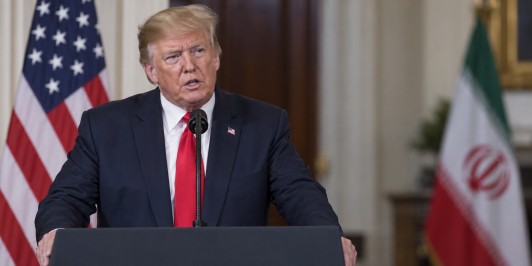
As tensions in the Middle East persist, U.S. President Donald Trump addressed the United Nations General Assembly with a critical message about the ongoing conflict with Iran. During his speech in New York, Trump emphasized the dual paths facing the U.S.: pursuing a diplomatic agreement with Iran or escalating military actions. He suggested that the possibility of reaching a deal could arise following the U.S. midterm elections in November.
In his 37-minute address, Trump staunchly defended the United States’ military actions against Iran, reaffirming Washington’s commitment to preventing Tehran from acquiring a nuclear weapon. He accused Iran of missing opportunities for negotiation, attributing the current military escalation to Tehran’s refusal to engage constructively. The president also urged the international community to join in exerting economic pressure on Iran, criticizing the nation for its role in disrupting shipping through the strategic Strait of Hormuz.
Beyond the immediate conflict with Iran, Trump’s remarks touched on broader issues of international governance and security. He criticized the International Criminal Court, calling on member states to withdraw from the institution, and stated that the United States would resist any international legal proceedings involving its military personnel. This stance reflects a broader skepticism of international legal bodies that Trump has expressed throughout his presidency.
Trump also addressed ongoing efforts for peace in the region, highlighting the ceasefire and reconstruction initiatives in Gaza. His speech came amid broader discussions at the UN focusing on enduring conflicts in the Middle East and other pressing global challenges. As these issues continue to unfold, Trump’s address underscored the complexity and interconnectedness of international diplomatic and military efforts.