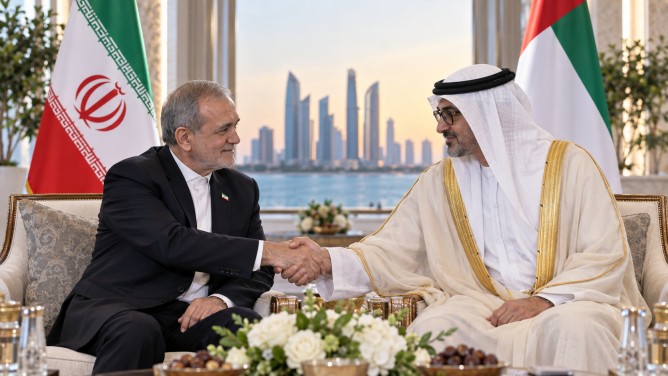
On the heels of strained regional dynamics, Iranian President Masoud Pezeshkian has expressed a mutual desire with the United Arab Emirates to mend and strengthen ties. This statement comes as Iran seeks to move beyond recent tensions and foster a constructive dialogue with its Gulf neighbor. President Pezeshkian’s comments followed a meeting with Abu Dhabi Crown Prince Sheikh Khaled bin Mohamed bin Zayed Al Nahyan during the BRICS Summit held in New Delhi. The discussions, which Pezeshkian described as forward-looking and productive, focused on enhancing bilateral relations and collaborating on future endeavors.
This encounter between Pezeshkian and Sheikh Khaled represents a significant diplomatic engagement, being the highest-level interaction between the two nations since the escalation of conflict in West Asia. The relationship between Iran and the UAE had been strained, particularly after the UAE decided to halt trade and financial transactions with Iran amidst rising regional tensions. Both leaders addressed critical topics, including regional and international developments, with a keen emphasis on reducing tensions, ensuring stability, and advancing peace and development in the region.
The renewed dialogue comes shortly after Iran, the UAE, and other BRICS countries issued a joint statement that advocated for restraint in ongoing conflicts. The UAE holds substantial economic importance for Iran, primarily through Dubai, which serves as a pivotal commercial hub for the Iranian diaspora and remains a vital conduit for economic activities despite prevailing international sanctions.
Meanwhile, in a related development, U.S. President Donald Trump remarked that he had no concerns regarding a proposed meeting between Iran and Gulf states focused on discussions about the strategic Strait of Hormuz. This meeting was scheduled to occur in Oman, amidst ongoing tensions between Washington and Tehran. The Strait of Hormuz remains a crucial maritime route, underscoring the significance of diplomatic efforts in maintaining regional stability.