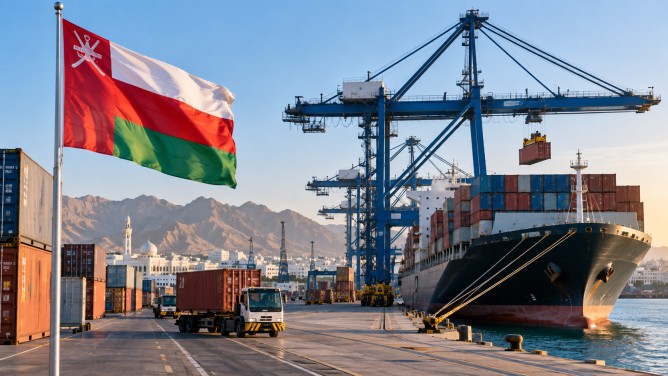
Oman achieved a notable trade surplus of approximately OMR4.7 billion in the first six months of 2026, marking a significant 51% increase compared to OMR3.1 billion in the same period the previous year. This growth, based on official data, was primarily fueled by a rise in merchandise exports, which climbed by 15.3% to reach around OMR13.2 billion by the end of June. The boost in exports was largely attributed to the oil and gas sector, where export values surged by 16.5%, climbing from OMR7.4 billion to OMR8.6 billion.
In addition to the robust performance of oil and gas, non-oil exports also saw an upswing, increasing by 11.4% to roughly OMR3.6 billion. Meanwhile, re-exports experienced an impressive growth rate of 20%, reaching OMR978 million. Despite these significant increases in exports, merchandise imports saw only a modest rise of 2.1%, amounting to OMR8.6 billion.
The United Arab Emirates emerged as a key market for Oman’s non-oil exports, importing goods valued at OMR1.134 billion. Saudi Arabia was the second-largest destination, receiving OMR357 million worth of non-oil exports, followed closely by India, which imported OMR333 million. These figures underscore the pivotal role of regional partners in Oman’s export strategy.
In terms of re-exports, Iran was the foremost destination, receiving goods worth OMR254 million. The UAE was again a significant trading partner, importing OMR221 million in re-exported goods, while Saudi Arabia came in third with imports valued at OMR188 million. These trade relationships highlight Oman’s strategic position as a re-export hub in the region.
On the import side, the UAE continued to be Oman’s largest supplier, providing goods valued at OMR2.423 billion. China followed as the second-largest source of imports, contributing OMR1.194 billion, with Türkiye ranking third, supplying goods worth OMR676 million. These partnerships reflect the diverse sources of imports that support Oman’s economy.