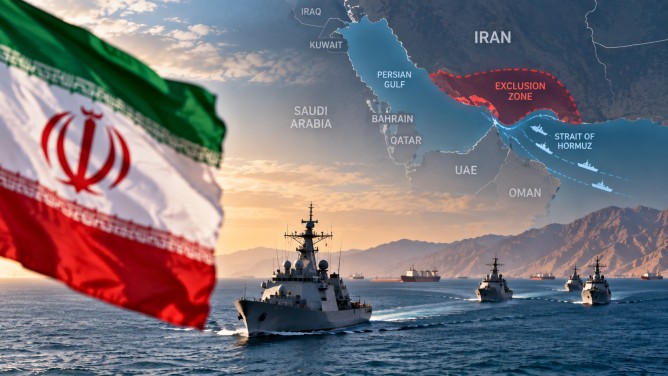
In a move that could heighten tensions in a crucial maritime region, Iran has announced plans to create a new “exclusion zone” near the Strait of Hormuz. The zone is intended to target vessels it suspects are attempting to traverse the strategically vital waterway. Mohsen Rezaei, who recently assumed leadership of Iran’s Supreme National Security Council, stated that this zone would stretch from the vicinity of the current U.S. naval blockade towards the Strait of Hormuz and extend into the Arabian Gulf. Ships identified as entering this zone with the aim of crossing the strait may face being added to an Iranian sanctions list.
This announcement comes amid a significant increase in hostilities, marked by the United States conducting strikes on three Iranian oil tankers following Iran’s launch of ballistic missiles aimed at U.S. warships. Furthermore, Iran has claimed responsibility for striking an unmanned U.S. vessel attempting to enter the strait, though this assertion has been dismissed by the U.S. military. The Strait of Hormuz is a pivotal conduit for global oil and gas transportation, and any disruptions in this area have led to concerns regarding energy prices and broader economic impacts worldwide.
In response to the heightened tension, the United States has bolstered its naval presence to enforce a blockade of Iranian ports, aiming to prevent Tehran from exporting oil. This military maneuver is complemented by increased economic sanctions on Iran, following the breakdown of diplomatic negotiations. While talks between Washington and Tehran remain at a standstill, each side continues to levy accusations of violations against the other.
Despite these frictions, U.S. officials report that a substantial volume of oil continues to flow through the Strait of Hormuz, aided by naval protection and alternative regional pipelines. Rezaei has emphasized Iran’s willingness to continue diplomatic efforts but has underscored the necessity for stronger assurances in any prospective agreements. The situation remains tense as both countries navigate the complexities of maintaining energy security while managing escalating geopolitical conflicts.