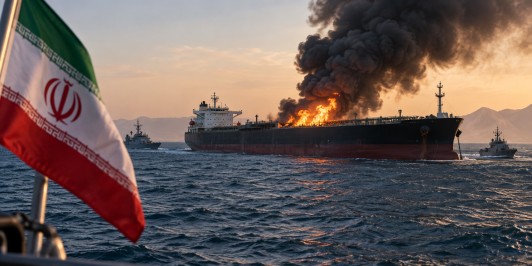
An oil tanker named EL GAIA was reportedly engulfed in flames after detonating naval mines in the Strait of Hormuz, according to Iran’s Islamic Revolutionary Guard Corps (IRGC). The incident occurred as the vessel attempted to navigate a restricted route through the strategic waterway, which Iranian authorities had previously declared off-limits. Efforts by Iranian authorities to extinguish the fire were unsuccessful.
The IRGC Navy indicated that warnings had been issued about the dangers associated with using the prohibited path. This incident underscores the ongoing tensions surrounding the Strait of Hormuz, a critical corridor for global energy trade, carrying a substantial portion of the world’s oil and gas supplies. The closure of this passageway and its control under Iranian naval forces have sparked concerns about potential disruptions to international energy markets.
In the wake of the incident, Iran’s Persian Gulf Strait Authority issued a cautionary note to insurance companies, protection and indemnity insurers, as well as classification societies, advising them against providing services to vessels that violate these maritime restrictions. This move is part of Iran’s broader strategy to enforce stricter controls over the passage through the strait, a crucial chokepoint in international shipping.
The heightened control measures by Iran came in response to U.S.-Israeli military actions on Iranian targets on February 28. Additionally, U.S. forces have enacted a naval blockade aimed at monitoring vessels entering and departing Iranian ports. These developments have contributed to an increasingly complex geopolitical landscape in the region, with the Strait of Hormuz at its center.