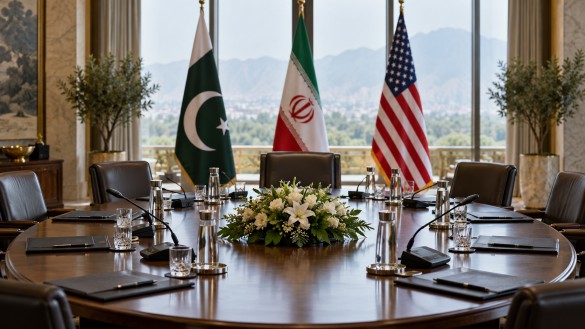
Pakistan is cautiously optimistic about its role in mediating between Iran and the United States, as regional tensions persist and efforts to prevent further escalation continue. This optimism was articulated by Pakistan’s military spokesperson, Lieutenant General Ahmed Sharif Chaudhry, who highlighted recent diplomatic activities as positive developments.
Field Marshal Asim Munir, Pakistan’s Army Chief, has made multiple visits to Tehran this month, the latest being on Monday alongside senior officials from Saudi Arabia and Turkey. Chaudhry noted the significance of these visits in fostering dialogue, yet he warned that there are influential parties that could potentially disrupt the progress towards a diplomatic settlement. He refrained from disclosing specific details of the discussions or confirming whether the United States is in support of Pakistan’s diplomatic mission.
The visit to Tehran included notable figures such as Saudi Defence Minister Prince Khalid bin Salman and Turkish intelligence chief Ibrahim Kalin, indicating a broader regional effort to address the ongoing conflict between Iran and the US. This diplomatic engagement is seen in the context of a defense agreement signed by Pakistan, Saudi Arabia, and Turkey on August 7. The pact stipulates that an attack on any of the signatories will be considered an attack on all, reinforcing their collective security and deterrence capabilities.
Chaudhry mentioned that the agreement is open to other countries that share the objectives of regional peace and collective deterrence, although any expansion would require approval from the political leadership of the founding countries. When questioned about deploying additional Pakistani troops to Saudi Arabia, Chaudhry stated that it would depend on the security situation and mutual consultations between the governments involved.
Pakistan remains committed to the defense of Saudi Arabia and the protection of the holy cities of Makkah and Medina. However, Chaudhry clarified that Pakistan is not involved in the conflict in Yemen, distancing the country from the ongoing hostilities there.
These diplomatic initiatives by Pakistan come at a time of heightened concern about the potential for the Iran-US confrontation to exacerbate regional instability and threaten broader Middle Eastern security. Enhanced cooperation among regional powers is increasingly viewed as essential to avoiding further escalation in the region.